THE NEED
Small brands need new product visuals across channels. Rebuilding scenes for each variation creates repeated setup and revision work.
AI × 3D PRODUCTION
We’re building a workflow that turns product briefs into editable 3D scenes and short animations—combining AI-assisted planning with Blender and human creative direction.
Independent venture · Early development
One production approach.
Five creative directions.
THE FIRST USE CASE
Small brands need new product visuals across channels. Rebuilding scenes for each variation creates repeated setup and revision work.
Start with a supplied 3D model and a clear brief. Develop one editable product scene, then adapt its camera, lighting and format for stills and short clips.
01 / OUR DEVELOPMENT AREAS
These areas shape our product roadmap. Short product animations are our first focus; the remaining areas are in planning.
Studio imagery and short animations that reveal a product’s form, materials and character. We’re developing our first production experiments using controlled scene templates.
3D intros, outros and short identity sequences based on an existing brand logo. The goal is a consistent motion language across different channels.
Animations showing how parts fit together or how a product works, using existing 3D models. Technical accuracy will rely on review by the product specialist.
Step-by-step 3D explanations of geometry and basic mechanics. Scripts, visual examples and short explanations that educators can review.
Defined object families, environment props and color variations for independent developers. Our initial aim is simple, editable models with a consistent visual style.
02 / PRODUCT STUDY
ORIGINAL CONCEPT · FICTIONAL PRODUCT
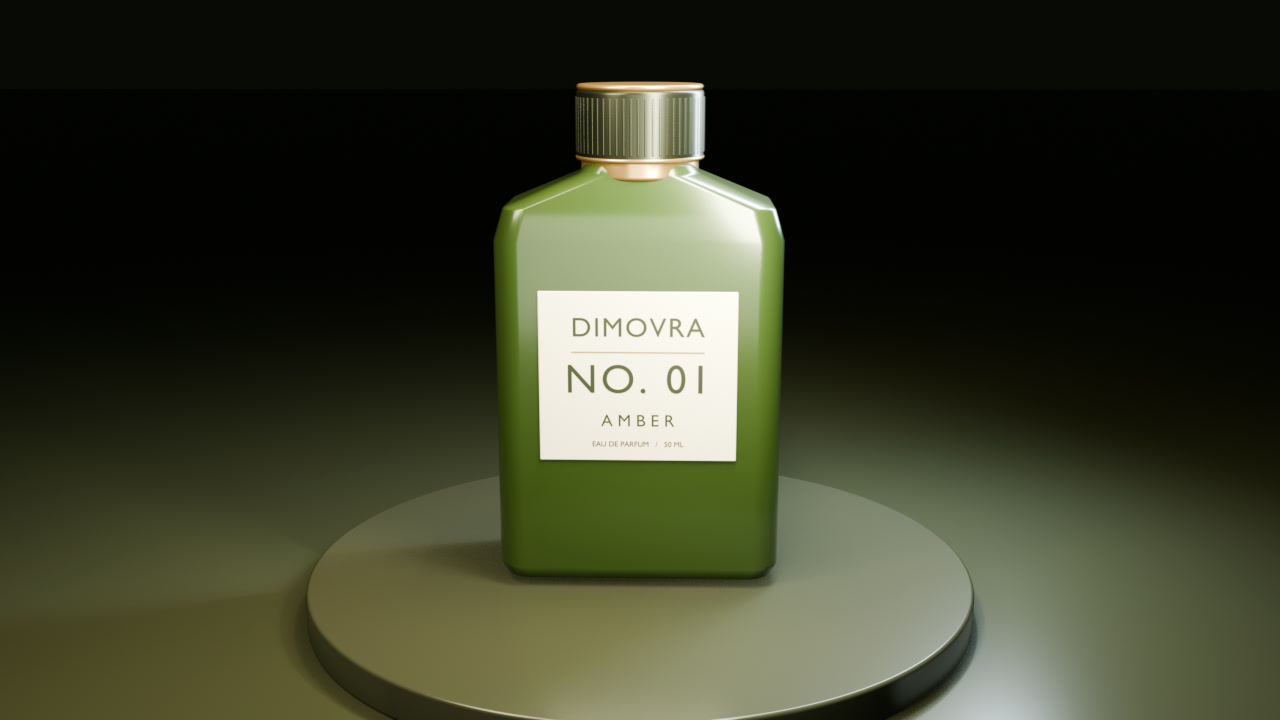
A 12-second product film for an original perfume concept. Satin olive glass, champagne-gold details and three controlled camera shots bring a single editable scene to life.
Create a calm studio film for a fictional 50 ml perfume: reveal the cap, establish the label, then finish on the full bottle. Keep the product consistent across every shot.
00–04s / Cap & material detail
04–08s / Label & camera arc
08–12s / Full-product reveal
Codex assisted the creative plan and Blender scene scripting. Blender created and rendered the geometry, materials, lighting and camera animation. Claude API integration is a planned milestone.
03 / MOTION STUDY
PERSONAL PROTOTYPE · NOT A CLIENT PROJECT
A fruit-slicing animation: one of our first studies bringing geometry, materials, lighting, camera work and timing into a single scene.
Created in Blender as a production study. It demonstrates 3D motion, not an automated AI pipeline. Brief-to-scene automation is the next development milestone.
04 / THE APPROACH WE’RE DEVELOPING
Planned Claude API integration: turn a product brief into a structured shot list, suggest camera and lighting settings, and translate revision notes into scene changes. Blender handles the geometry and rendering; a creator approves the result.
Define the product, intended audience, brand references and output format before planning begins.
Use Claude to propose a shot list and structured scene parameters within a supported template. API integration is planned.
Apply reviewed parameters to reusable Blender scenes. Keep geometry, materials and camera settings editable.
Check product fidelity and visual quality, incorporate feedback, then export the approved stills or video.
05 / OUR STARTING POINT
Dimovra is an independent, founder-led venture in early development. We’re starting with short product animations for small brands and creative teams that need repeatable visual content.
Our next milestones: a reusable product scene, a Claude-assisted brief-to-shot-list prototype, then a small pilot. We plan to track time to first preview, revision rounds and consistency against the original brief.
EARLY PILOT CONVERSATIONS
Tell us about your product, the visual you need and your timeline. We’ll discuss whether it fits an early pilot.
hello@dimovra.xyz